Few Ayurvedic therapies sound as simple as Nasyam, and few raise as many questions. A prescribed oil, ghee, or herbal preparation is placed in the nostrils under a practitioner’s guidance, and classical texts describe it as a way of working with the head, neck, and sensory organs. People searching for the meaning of Nasyam treatment are often dealing with a blocked nose, seasonal congestion, or dryness and want to know whether the therapy deserves a place in their routine.
How Nasyam Works in Ayurvedic Understanding
Nasyam follows a logic that differs from that of a modern nasal spray, and its vocabulary can feel unfamiliar on first reading. The traditional reasoning behind using the nose as a route, and the key terms a first-time reader needs. Everything here reflects traditional Ayurvedic understanding rather than conventional-medicine clinical findings.
What Is Nasyam?
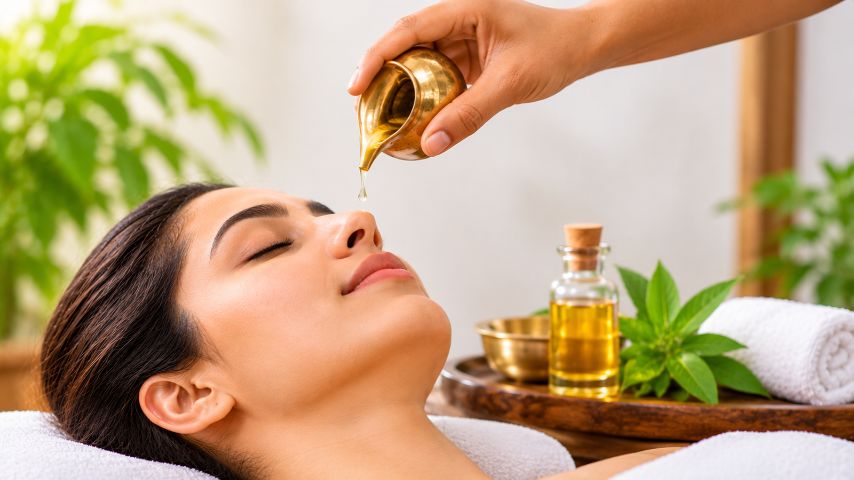
Nasyam (also spelled Nasya) is an Ayurvedic therapy in which a prescribed medicated oil, ghee, or herbal preparation is administered through the nostrils. Practitioners traditionally use it for the head, neck, and sinus region, and it is classified as one of the five Panchakarma procedures. The word comes from nasa, the Sanskrit term for nose. Classical texts, including the Charaka Samhita and Ashtanga Hridaya, describe it at length, and the tradition treats it as more than a nasal application: a structured procedure with preparation, administration, and aftercare, carried out under the guidance of a trained practitioner.
Practitioners describe different forms depending on the aim. A cleansing form is meant to clear accumulated secretions from the head region, a nourishing form uses unctuous substances to lubricate the nasal passages, and a pacifying form is described for gentler, calming purposes. A review in the Journal of Ayurveda and Integrated Medical Sciences outlines these categories as Rechana, Brimhana, and Shamana, though it comes from within the Ayurvedic literature. The specific form and substance are decided individually, as covered below.
Why the Nose? The Traditional Rationale
Classical Ayurvedic texts describe the nose as the doorway to the head, called Shiras in Sanskrit. In this view, a substance introduced through the nostrils can reach the channels (srotas) of the head and neck. The tradition links this region with the senses of smell, sight, and hearing, as well as with the voice and mental clarity. That is why Nasyam is discussed alongside complaints felt around the face, forehead, and neck, and why practitioners treat it as a therapy for the head region rather than only for the nose itself.
Ayurveda also associates this area with Kapha, one of the three doshas, the governing principles of body and temperament. Kapha is tied to moisture, heaviness, and mucus, so practitioners link congestion-type complaints to its accumulation, and dryness to its depletion. These are explanatory frameworks from Ayurvedic theory, not anatomical statements that conventional medicine confirms. Readers weighing Ayurveda against conventional care can treat this as the tradition’s own language for describing experience, useful for understanding why a practitioner recommends a particular approach but separate from what laboratory or imaging tests would show.
What Happens During a Nasyam Session
A session is usually brief, but it is rarely just a few drops placed without preparation. The sequence of steps and the substances commonly described in traditional practice help a first-time patient understand what the process involves. Details vary by practitioner, so treat this as a general picture rather than a fixed protocol.
The Sequence of a Nasyam Session
A traditional Nasyam session usually begins with preparation of the face, head, and neck. Practitioners commonly apply a gentle oil massage to the forehead, cheeks, and neck, followed by a mild herbal steam, known as swedana, over the face. This is described as softening the tissues and loosening secretions before the preparation is administered. The person is usually asked to empty the bladder beforehand so that they can lie still and settle comfortably. Practitioners explain each step as it happens, and the room is typically kept warm and free of draughts.
The person then lies on their back with the head slightly tilted back and the neck supported. A measured number of drops of the prescribed preparation is placed in each nostril, one side at a time, while the person breathes gently rather than inhaling forcefully. Afterward, the practitioner may massage the palms, soles, shoulders, and neck. The person is typically asked to spit out any secretions that reach the throat instead of swallowing them, and some practitioners suggest a warm-water gargle. The number of drops and the exact order of steps are set by the practitioner for each person.
Oils, Ghee and Herbal Preparations Used
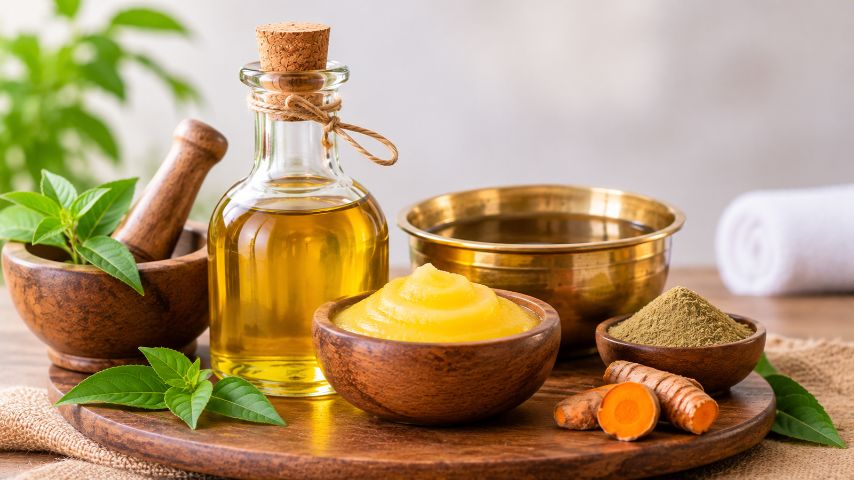
Several preparations appear in traditional Nasyam. Plain sesame oil, ghee (clarified butter), and medicated oils such as Anu Taila are commonly cited in classical references. Herbal powders and decoctions are also described, generally for cleansing forms, while oil- and ghee-based preparations are associated with the nourishing forms. Ayurveda traditionally describes oils and ghee as unctuous and softening, which is why they feature in forms aimed at dryness. Each substance carries its own traditional associations, which is why a practitioner makes the choice rather than copying from a general list.
The choice depends on the practitioner’s assessment of the person’s constitution, current imbalance, and the season. A very dry nasal passage may be approached differently from one described as heavy with secretions, and a person who feels run down may be offered a different preparation from someone with a robust constitution. Because preparations vary in composition and strength, readers should not select a product from a shop shelf on their own. Vedang Clinic describes proprietary herbal oils among its offerings. However, ingredient lists are not part of its published service pages, so anyone curious about a specific preparation should ask the practitioner directly.
Nasyam and Sinus and Congestion Concerns
This is the section most readers arrive for, so the language here is deliberately careful. Ayurvedic tradition and clinical evidence are different things, and treating them as the same would mislead anyone weighing Nasyam against conventional care.
What Practitioners Describe for Sinus and Congestion
Ayurvedic practitioners traditionally describe Nasyam as supporting the nasal passages and sinus region, especially where a person reports heaviness in the head, a recurring blocked feeling, or persistent dryness. Classical references also mention its use for a diminished sense of smell and stiffness around the neck and shoulders. Within the dosha framework, a cleansing form is traditionally chosen where Kapha is considered to have accumulated in the head, while a nourishing form may be preferred where dryness predominates. Practitioners present this as a way of supporting comfort and balance, not as a cure for any diagnosed condition.
Vedang Clinic states that it does not promise guaranteed results, and that responses to Ayurvedic care vary from person to person. When a practitioner recommends Nasyam, it is usually one element of a wider plan that may include dietary and lifestyle guidance. Anyone searching for an Ayurvedic treatment for sinus congestion will find that the tradition frames it in terms of balance and comfort, and readers can browse the clinic’s respiratory health resources for related articles on seasonal and sinus-related topics.
What Patients Report, and What Has Not Been Established
Patients who try Nasyam sometimes report that the nose feels more lubricated or that breathing feels easier afterward, and some say they sleep more comfortably. These are individual accounts. They are not controlled clinical evidence, and they cannot predict how any other person will respond. The testimonials published by the clinic are likewise individual experiences hosted on its own site, so they sit closer to personal stories than to independent reviews. A reader comparing options should weigh them accordingly and ask the practitioner what outcomes are realistic.
The wider research picture is thin. The US National Center for Complementary and Integrative Health notes in its overview of Ayurvedic medicine that only a small number of clinical trials of Ayurvedic approaches have appeared in Western medical journals, and it advises against using Ayurveda to delay seeing a conventional provider. For Nasya specifically, a University of Adelaide systematic review of Nasya oil for facial paralysis, a different condition from sinus complaints, found only two small studies and described the evidence as extremely limited. Sinus symptoms can arise from infection, allergy, or structural causes that need conventional assessment, so Nasyam should never replace treatment a doctor has prescribed.
Nasyam Right for You? Speak to a Practitioner
Wondering whether Nasyam suits your needs? Dr. Rushalli Nair and her team at Vedang Clinic, an Ayurvedic clinic in Mumbai, can assess your constitution and health history during a consultation. Learn more about the clinic’s Panchakarma programs, or book an appointment online to discuss your questions with a practitioner.
Deciding Whether Nasyam Suits a Person
Ayurveda holds that no therapy suits everyone, and Nasyam is no exception. Traditional texts list conditions and situations in which it is deferred or avoided. The subsections below explain how a practitioner usually reaches that judgment and how timing and preparation fit into it, and why a thorough history matters more than the therapy’s reputation.
How a Practitioner Assesses Suitability
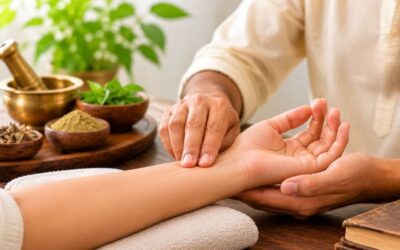
An Ayurvedic practitioner typically begins with the person’s Prakruti, the inborn constitution, and Vikruti, the current imbalance. Digestion, sleep, symptom patterns, age, and general strength are then considered. At Vedang Clinic, the signature assessment is Nadi Pariksha, the traditional Ayurvedic pulse reading, which the clinic uses to build personalized recommendations. It is a traditional assessment, not a substitute for blood tests, imaging, or specialist examination, so a practitioner may also ask to see recent reports before deciding whether Nasyam belongs in a plan. Nasyam is then weighed against this wider picture.
Traditional texts describe Nasyam as generally deferred in certain situations, including pregnancy, menstruation, acute fever, active infection, and immediately after a meal or a bath. Very young children and frail older adults are also approached with caution in classical guidance. These are traditional guidelines, and a qualified practitioner weighs them alongside your medical history. Telling the practitioner about every diagnosis, allergy, and medication, including anything for blood pressure, asthma, or allergies, is part of making the decision safely. The clinic states that it asks patients to mention any prescribed medication, because Ayurveda there complements rather than replaces medical treatment.
Seasons, Timing and Preparatory Steps
Ayurvedic tradition pays close attention to timing. Classical texts link Nasyam to particular times of day and seasons, and practitioners often schedule it according to the person’s condition and the character of the season. Mumbai’s humid monsoon months and drier winter months are the kind of seasonal contrast a practitioner may weigh. Very cloudy, stormy, or windy days are traditionally considered less suitable for the procedure. These timing rules come from classical Ayurvedic texts, and their value in modern terms has not been tested clinically, but practitioners follow them closely and will often ask when you plan to visit.
Preparation matters as well. Sessions are traditionally done on an empty or lightly filled stomach, so that nothing sits heavily during the procedure. A practitioner may suggest easing off heavy, oily, or chilled foods beforehand, and wearing loose clothing and arriving unhurried helps the session start calmly. Expect questions about your meals, routine, sleep, and recent symptoms before the first session, because these shape both the choice of preparation and the timing. As above, bring your medication list and recent reports.
What a First-Time Patient Can Expect
Knowing what the day looks like removes much of the uncertainty about a therapy involving the nose. The subsections below cover the setting, the duration, the conversation with the practitioner, and the rest and routine traditionally advised afterward. These observations reflect general practitioner-level patterns, not any individual patient’s experience or a promise of any outcome.
The Setting, Duration and Course Length
First-time patients often expect a clinical procedure and instead find a calm, unhurried session. The warm oil massage and herbal steam usually take up much of the time, and the administration itself is brief. Practitioners often observe that people who arrive relaxed and breathe slowly settle into the session more easily, so slow breathing is encouraged throughout. Including preparation, the steps typically fit within an hour, and the practitioner explains each one beforehand. Questions are welcome at any point, and a person who wants to pause or ask something can say so, because the pace is set around the individual.
Courses are sometimes described over several consecutive days, though the number varies by person, the form of Nasyam chosen, and the aim. Within Panchakarma, Vedang Clinic describes modules of 7, 14, 21 and 28 days, with the content of each set by the practitioner after assessment rather than fixed in advance. A common pattern at the first visit is that the conversation matters as much as the procedure: practitioners usually spend considerable time on history, diet and routine before recommending anything. Anyone who prefers to begin with a consultation alone, without committing to a course, can ask about this when booking.
Rest and Routine in the Hours After a Session
Traditional guidance for the hours after Nasyam is simple and mostly about rest. People are usually advised to stay indoors where possible, avoid cold wind, dust and strong air conditioning, and keep the head and neck covered when going out. A bath, vigorous exercise and heavy meals are traditionally postponed for a short period, and warm water is generally preferred to cold drinks. Practitioners present these as ways of letting the procedure settle, and the specific instructions differ from person to person, so it helps to ask for them to be written down before leaving the clinic.
Practitioners also tend to advise against long stretches of loud talking and against scheduling the session just before a demanding workday or an important commitment. A common observation is that people who build in an hour or two of quiet afterward describe a more settled experience than those who return straight to a busy schedule. Resuming normal meals and routines gradually, as advised, is the traditional approach. Following up with the practitioner after the session, by phone or at the next visit, is the proper route for any questions about how to continue.
Nasyam at Vedang Clinic and Within a Wider Plan
Nasyam is rarely considered in isolation in Ayurvedic practice. The subsections below describe where it sits in the clinic’s published service catalog, who offers it, and how appointments work across the clinic’s two Mumbai locations. Credentials and timings are stated as the clinic publishes them and should be confirmed directly before you travel.
Where Nasyam Fits in Panchakarma Programs
Vedang Clinic, an Ayurvedic clinic and traditional wellness center in Mumbai, lists Nasyam in its Panchakarma programs, where it is described as the nasal administration of prescribed medicated preparations. It also appears among the five classical Panchakarma procedures the clinic outlines, alongside Vamana, Virechana, and Basti. The clinic describes Panchakarma as a bio-purification of body, mind and spirit, with treatment selection and duration determined by the practitioner’s assessment. Nobody should assume a particular combination or length of therapy before a consultation, and specifics such as the preparation used and the number of sessions are best confirmed directly with the clinic.
The clinic states that its therapists are trained in traditional Ayurvedic and Kerala therapies, and its Panchakarma catalog also lists external therapies such as Abhyanga, Swedana, and Shirodhara. As part of a broader plan, Nasyam may be combined with dietary guidance, including the clinic’s four-week Vedic Diet Program, which includes weekly one-to-one consultations, or considered on its own, depending on what the practitioner finds. Readers curious about how the clinic frames Nasyam alongside other therapies, such as those for sleep, can read its article on Ayurvedic insomnia therapies, including Nasya.
Consulting in Bandra West and Malabar Hill
Vedang Clinic has practiced in Mumbai since January 2008, when Dr. Rushalli Nair founded it. Its primary clinic is in Bandra West, off Linking Road, and its website also lists a consultation location at Doctor Center in Kemps Corner, Malabar Hill, with Tuesday appointments from 5 PM to 7 PM. Appointments can be requested through the clinic’s online booking page or by phone. Because timings and available procedures can change, it is sensible to confirm the location, schedule, and whether Nasyam is available before traveling.
Dr. Nair holds BAMS and M.D. (Ayurveda) qualifications, as published in the clinic’s profile, and the profile describes her as an alumna of R.A. Podar Ayurved Medical College in Mumbai. The clinic states that she has more than 20 years of clinical experience and has studied Nadi Pariksha in the Guru-Shishya tradition. These details are as stated by the clinic and its professional profiles, and readers who want independent confirmation can ask the clinic for registration details during a first inquiry. A consultation is when suitability for any therapy, Nasyam included, is decided.
When to See a Conventional Doctor Instead
Nasyam is a traditional Ayurvedic practice, and Vedang Clinic is an Ayurvedic clinic, not a hospital. It does not replace emergency care, specialist assessment, or doctor-prescribed medication, and it is not a substitute for a diagnosis. Some symptoms call for prompt conventional evaluation before any traditional therapy is considered.
Seek medical advice first if you have facial swelling or pain with fever, thick discolored discharge lasting more than a week or two, blood in nasal discharge, repeated nosebleeds, sudden loss of smell, or difficulty breathing, which needs urgent care. Persistent one-sided blockage, symptoms following a head injury, and severe headache also warrant a doctor. Children, pregnant women, and people with asthma, immune conditions, or recent nasal surgery should speak to their physician before considering Nasyam. A good practitioner will welcome this and may ask to see recent reports. Used thoughtfully, Ayurveda and conventional care can sit side by side, with the conventional diagnosis leading when the cause is unclear.
Book a Nasyam Consultation at Vedang Clinic
Ready to take the next step? Dr. Rushalli Nair and the team at Vedang Clinic offer Ayurvedic consultations in Bandra West and Malabar Hill, Mumbai. Share your health history, ask about suitability, and plan your care with a practitioner. Use the details below to reach out and arrange your visit.
Vedang Clinic: Bandra West (primary clinic): 903, Supreme Headquarters, Plot No. 543, 33rd Road, Off Linking Road, Bandra West, Mumbai – 400050
Consultation location: Malabar Hill: Doctor Center, 201, Plot No. 135, August Kranti Road, Grant Road West, Kemps Corner, Malabar Hill, Mumbai – 400007. The website lists Tuesday appointments, 5 PM–7 PM. Please confirm before visiting.
Phone: +91 9619472255
Email: vedangclinic@gmail.com
Website: www.vedangclinic.com
Frequently Asked Questions About Nasyam: Nasal Therapy for Sinus & Congestion
How is Nasyam performed?
Nasyam usually begins with a gentle oil massage of the face and neck and a mild herbal steam. The person lies back with the head slightly tilted, and a measured number of warmed, prescribed drops are placed in each nostril, one side at a time. A shoulder and palm massage follows, and secretions are spat out rather than swallowed. The practitioner individualizes the preparation and number of drops.
What is the meaning of Nasyam in Ayurveda?
Nasyam, also written Nasya, comes from nasa, meaning nose, and refers to administering medicated preparations through the nostrils. Ayurveda counts it among the five Panchakarma procedures and groups it with therapies for the head. Classical texts use the term Shirovirechana for the cleansing form and describe nourishing and pacifying forms too, so the word covers a family of practices, not a single standard procedure.
Is Nasyam the same as a nasal spray?
No. A nasal spray is a standardized pharmaceutical product, whereas Nasyam is a practitioner-guided Ayurvedic procedure with preparation, positioning, and aftercare steps. It also differs from Jala Neti, the yogic saline nasal rinse, because it uses oils or ghee and is not a flushing practice. Nasyam should not be treated as an interchangeable replacement for medication prescribed by a doctor.
Can Nasyam help with sinus problems?
Ayurvedic practitioners traditionally use Nasyam for sinus and congestion-type complaints, and some patients report feeling more comfortable afterward. However, clinical evidence is limited, and it is not established as a treatment for sinusitis. Allergic, infective, or structural causes need conventional assessment, such as an ENT examination. Persistent facial pain or fever should prompt a doctor’s visit before any traditional therapy is considered.
Who should avoid Nasyam?
Traditional texts advise caution during pregnancy, menstruation, acute fever, active infection, and right after meals or bathing. Children and frail older adults are approached carefully, and anyone with recent nasal surgery or frequent nosebleeds should seek medical advice first. Classical guidance also lists people who are intoxicated or exhausted. A practitioner reviews these factors, so disclose your full medical history before any session.
How many Nasyam sessions are usually needed?
There is no fixed number. Practitioners vary the course by constitution, the form of Nasyam and the season, and some describe consecutive-day sessions followed by a review. Someone attending for seasonal dryness may receive a different schedule than someone on a longer Panchakarma module. Vedang Clinic describes 7-, 14-, 21-, and 28-day modules, with content set after assessment.
What should I avoid after Nasyam?
Traditional aftercare advises resting, avoiding cold wind, dust, smoke, and strong air conditioning, and postponing a bath, intense exercise, and heavy meals for a short while. Warm water is preferred to cold drinks, and loud, prolonged talking is discouraged. Instructions differ by person, so ask your practitioner for written guidance before you leave. Persistent concerns should be raised with your practitioner or doctor.
Can I do Nasyam at home?
Some Ayurvedic practitioners describe a gentle daily routine of one or two drops of oil, known as Pratimarsha Nasya. Still, it should be learned from a qualified practitioner and not copied from online videos. A first consultation establishes whether any home routine is appropriate, which oil is suitable, and whether ongoing symptoms need conventional medical assessment instead. Never self-administer in place of prescribed medication.
Do I need a consultation before Nasyam?
Yes. In Ayurvedic practice, assessment comes before therapy, so the practitioner can judge whether Nasyam suits your constitution and health history. Vedang Clinic describes its Nadi Pariksha consultation as lasting up to an hour, with outputs that can include a lifestyle plan, diet plan, and food-combination guidance. Bring a list of any medications and recent reports, and discuss suitability before booking a session.