Kati Basti for Back Pain: Does It Really Work?
Lower-back pain sends many people searching for options beyond painkillers, and Kati Basti keeps appearing. In this Ayurvedic therapy, warm medicated oil is held in a small dough reservoir on the lower back for a set period. It is gentle, slow, and soothing, which is part of its appeal. But does it really work?
What Kati Basti Is and What the Evidence Says
Before judging whether Kati Basti works, it helps to know exactly what it is and what the question is really asking. This gives a direct answer first, then unpacks the therapy’s name and structure so you can separate what is traditionally described from what has been scientifically demonstrated.
Does Kati Basti work for back pain? The short, honest answer
Kati Basti is traditionally used in Ayurveda to support comfort and mobility in the lower back, and many patients report feeling relief afterward. However, it has not been established as a clinically proven treatment for any back condition. Current research is limited, so it is best viewed as a complementary, traditional therapy rather than a replacement for medical care. That distinction matters. Patient-reported comfort is real to the person experiencing it, but it is a different kind of evidence from a controlled trial, and the rest of this article keeps the two apart.
Two things can be said with confidence about the therapy’s standing. First, Kati Basti has a long traditional history within Ayurveda, particularly in Kerala-style practice. Second, practitioners and patients describe it as soothing, and the combination of warmth and stillness is comfortable for many people. Its appeal is largely experiential: the slow pace, the warmth, and the unhurried attention are part of what people say they value. Where suitable, Kati Basti is considered alongside a medical assessment, not instead of it, and readers unsure what is causing their pain are best placed to start there.
Reading the name: Kati, Basti and the oil pool
In Sanskrit, kati refers to the waist or lumbar region, and basti here means to hold or retain. This is different from the Basti enema among the five classical Panchakarma procedures. The name literally describes the therapy: oil is retained over the lower back. Kati Basti is a localized form of Snehan, the Ayurvedic principle of oiling, applied to one region rather than the whole body. Practitioners describe comparable regional methods for the neck (Greeva Basti) and knee (Janu Basti). This reflects traditional Ayurvedic understanding rather than a conventional-medicine clinical claim.
Vedang Clinic lists Kati Basti among the individual therapies on its Panchakarma service page, and the clinic states that its therapists are trained in traditional Ayurvedic and Kerala methods. It is described as a localized therapy, meaning it addresses one region, in contrast to whole-body programs that unfold over days or weeks. Because the therapy is region-specific, suitability depends on what is happening in the lower back and in the person’s wider health. That is why an assessment normally comes first, and why a clinic that offers it without asking about your history deserves a few follow-up questions.
How a Kati Basti Session Is Performed
A Kati Basti session is calm and methodical, but each stage has a purpose. Knowing the sequence helps you judge whether a clinic is following traditional practice, what you will experience on the table, and which details are worth asking about before you commit to a course of sessions.
Step by step: from the dough ring to the oil pool
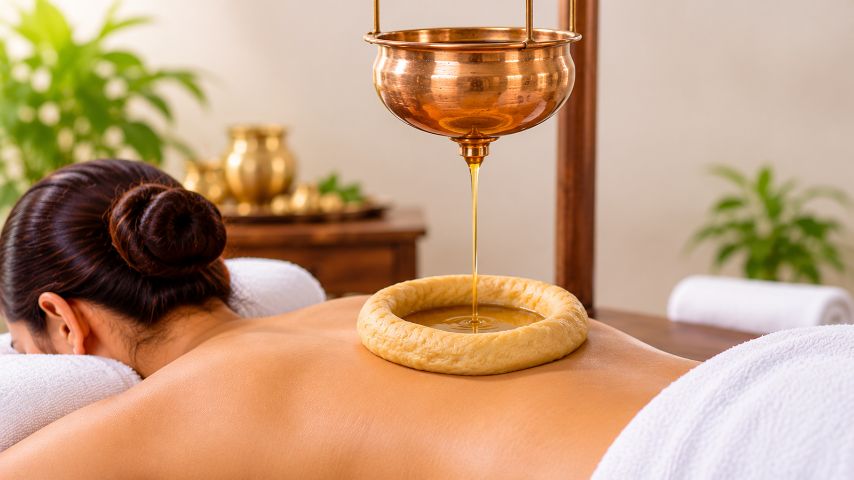
Practitioners typically describe the session as follows. You lie face down while the lower back is prepared, often with gentle oil application and warmth, which the clinic lists separately as other therapies. A ring is then built on the lumbar area from a dough of black gram (urad) flour mixed with water. It is pressed firmly to seal against the skin and is usually a few centimeters high. The ring forms a small wall, essentially a reservoir, and the practitioner checks it for gaps before any oil goes in so the oil stays contained.
Warm medicated oil is poured into the ring until it covers the area to a modest depth. The oil is kept warm by replacing cooled oil with fresh warm oil, often using a small cup or cotton swab. After the retention time, the oil is drained, the ring removed, and the area gently wiped. Many practitioners follow with mild heat or a light massage. The whole sequence is slow by design, with little talking and no rushing between stages, and a hurried session may suggest the traditional method is not being followed closely.
Oil choice, temperature and session length
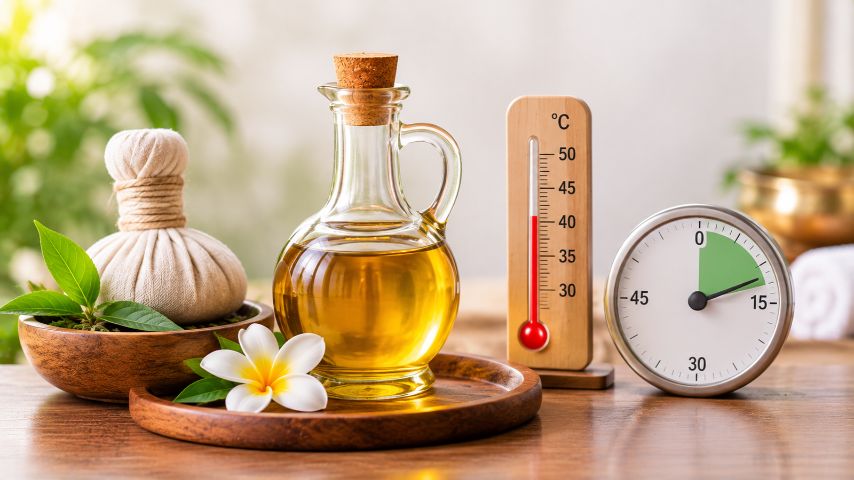
The oil is chosen by the practitioner according to the person’s assessment, and Ayurvedic practice commonly uses sesame-based or herbal medicated oils for lower-back work. Vedang Clinic has not published a list of oils or ingredients used for this therapy, so a reader should ask directly rather than assume. Temperature matters: the oil should feel pleasantly warm, and a careful practitioner tests it on their own inner wrist and on your skin before pouring. If you have patches of numb or less sensitive skin, mention it at the start so the practitioner can adjust how they check the oil’s warmth throughout the session.
Traditional descriptions place retention at roughly 20 to 45 minutes, and a course is often arranged over several consecutive days, though the number depends on the practitioner’s assessment. Vedang Clinic states that its Panchakarma modules run for 7, 14, 21, or 28 days depending on the therapy and the patient’s needs. Still, it does not publish a fixed course length specifically for Kati Basti, so confirm this at booking. Longer is not automatically better. If there is no change in comfort after a reasonable trial, discussing the plan with the practitioner and a physician is a sensible step.
The Ayurvedic Reasoning Behind Kati Basti
Ayurveda explains lower-back discomfort in its own vocabulary, which differs from how a physician or physiotherapist would describe it. This sets out the traditional logic and how practitioners decide whether Kati Basti is a fit, so you can read the reasoning critically and see where it differs from conventional explanations.
The traditional logic: Vata, dryness and Snehan
In Ayurveda, the body is understood through three Doshas, functional principles called Vata, Pitta and Kapha. The lower back and pelvic region are traditionally associated with Vata, which is described as cold, dry, and mobile, and classical texts place its principal seat in the lower abdomen and pelvis. Practitioners describe stiffness, dryness, and pain that varies with weather or stress as signs of Vata imbalance (a classical-text framework, not a clinical one). Snehan, meaning oiling, is the traditional response, and warmth is described as softening the tissues and calming Vata. These terms do not map neatly onto anatomy as modern medicine defines it.
Seen through a modern lens, some of the plausible comfort comes from familiar ingredients: sustained warmth, a period of lying still, and attentive touch. Heat is widely used in conventional self-care for muscle tightness, and relaxation can influence how pain is perceived. Nothing in that explanation proves Kati Basti’s specific mechanism, and nobody should claim it does. It suggests the experience may soothe some people for reasons that overlap with ordinary heat and relaxation. At the same time, Ayurvedic practitioners hold that the medicated oil and the tradition’s timing add something distinct. Both views can be held while the question remains open.
How a practitioner judges suitability
Ayurvedic assessment usually begins with questions about the pain: when it started, what worsens or eases it, and how it relates to sleep, digestion, work posture, and stress. Practitioners also consider Prakruti, the individual’s baseline constitution, and Vikruti, the current imbalance. At Vedang Clinic, Dr. Rushalli Nair, BAMS, M.D. (Ayurveda), is the lead practitioner, and the clinic describes Nadi Pariksha, traditional pulse assessment, as its signature approach to personalized plans. Pulse assessment is a traditional method, not a substitute for imaging or tests a physician may order. Ask any practitioner how they would decide, and what would make them advise against the therapy.
Practitioners generally look for features that make local oil therapy reasonable: a stiff or aching lower back, no signs of infection or acute inflammation, intact skin over the area, and no red-flag symptoms. A pattern practitioners often notice is that first-time patients arrive having already tried rest and over-the-counter medication, and want a gentler option. That is a general observation, not a specific case. A responsible assessment also asks what scans or medical opinions the person already has. If a physician has diagnosed a disc, spinal, or inflammatory condition, the practitioner should set expectations accordingly and treat Kati Basti as supportive at most.
Considering an Ayurvedic Assessment for Your Back?
If you would like to talk through whether Kati Basti suits your situation, Vedang Clinic offers Ayurvedic consultations led by Dr. Rushalli Nair. Bring any scans or doctor’s notes, and the practitioner can discuss whether localized oil therapy fits into your plan. Schedule a consultation with Dr. Nair to get started.
What to Expect as a First-Time Patient
Most people want to know how the therapy feels, how long its effects might last, and what to do afterward. This describes typical experiences as practitioners and patients commonly describe them, in practical terms, with the caveat that individual responses differ and none are guaranteed.
What the session feels like and how to settle afterward
Patients commonly describe a deep, spreading warmth across the lower back that feels heavy and calming, sometimes followed by drowsiness. Some people relax enough to fall asleep. Lying face down for the whole retention period suits most people, but if you have breathing difficulty or abdominal discomfort, ask the practitioner about alternative positioning beforehand. Tell the practitioner at any point if the warmth feels too much, since the oil can be adjusted. The oil is generous, so the area may feel slick even after it has been wiped.
In the hours afterward, many patients report feeling looser or lighter in the back, while others notice little change early on. Mild tiredness is common, so planning a quiet rest afterward is a practical idea. A practitioner may suggest warm clothing over the back and avoiding cold air or a cold shower straight away, because Ayurvedic tradition associates cold exposure with undoing a warming therapy. These are traditional aftercare conventions rather than clinical requirements. If anything about how you feel after a session concerns you, speak to the practitioner or your own doctor.
Aftercare habits and a realistic timeline
Practitioners generally pair Kati Basti with simple daily habits: gentle movement rather than prolonged sitting, attention to posture at a desk, warm light meals, and enough sleep. Dietary and breathing guidance from Ayurvedic clinics sits alongside the therapy as traditionally described, not as a medically validated program. A realistic expectation is that any benefit patients describe is more likely to be gradual and tied to the whole routine than to a single session. Ask the practitioner what you should track, such as how long you can sit comfortably, how you sleep, or how easily you get out of bed in the morning.
It is reasonable to set a review point. If, after the agreed number of sessions, you notice no change or the pain is worsening, that is useful information, and a conversation with a physician or physiotherapist is sensible. Some patients keep a short daily note on pain levels and activities, which helps both the practitioner and any doctor. Kati Basti is not meant to be an open-ended commitment. Practitioners often point out that expectations matter: people hoping for a quick fix are more likely to be disappointed than those who see it as one supportive element among several.
Weighing the Evidence Honestly
The title question deserves a straight answer about evidence. Here is what traditional use and patient reports can tell you, what they cannot, and how Kati Basti sits alongside the conventional options most doctors and physiotherapists discuss for back pain so that you can compare choices with clear eyes.
What tradition and patient reports can and cannot show
Kati Basti’s case rests on centuries of traditional use and on patient-reported experience. Both are meaningful: traditions persist because people value them, and patient comfort matters. But they cannot show cause and effect. Back pain often improves on its own over weeks, flares and settles, and responds to rest, expectation, and attention, so someone who feels better after a therapy may have improved regardless. Controlled studies with comparison groups are what normally separate these explanations. As of writing, published research on Kati Basti specifically appears limited, small, and variable in quality, so no firm conclusion about effectiveness can responsibly be drawn.
Vedang Clinic publishes patient testimonials on its own website, and it is fair to read them as individual accounts rather than independent or controlled evidence. The clinic’s own research notes make the same distinction, and this article follows it. The same caution applies to the clinic’s listed condition categories, including back and joint complaints: advertising a category of concern is not the same as demonstrating clinical efficacy. A cautious reader might treat testimonials as a description of what some people experienced, then seek independent medical guidance on the cause of their pain, using the two together rather than letting either replace the other.
Kati Basti alongside conventional back-pain care
Conventional guidance for non-specific lower-back pain generally emphasizes staying active, gradually returning to normal movement, simple pain relief where appropriate, and physiotherapy or exercise programs for persistent cases. Heat is often suggested for short-term comfort. Kati Basti overlaps with the heat-and-relaxation element but is not a substitute for exercise, strengthening, or diagnosis. Many readers considering it are already seeing a physician or physiotherapist, and there is no reason to stop. If you take prescribed medication, do not alter it because of an Ayurvedic therapy, and tell both practitioners what you are doing.
The decision-making questions are practical. What is the likely cause of your pain, and has anyone examined you or reviewed scans? What are you hoping the therapy will change, and how will you know? How many sessions are proposed, and when is the review point? Some people choose Kati Basti for relaxation and comfort, accepting that it is a complementary choice. Others prefer to wait until a medical cause has been ruled in or out. Both approaches are reasonable. What matters is that the therapy does not delay care you may need.
Suitability and Questions to Ask
Kati Basti is gentler than many Panchakarma procedures, but it is not right for everyone or every stage of back pain. This covers who should check with a doctor first and what to ask before you book, wherever you choose to have the therapy done.
Who should be cautious or postpone
Practitioners traditionally advise caution or postponement in several situations: fever or acute infection, open wounds, rashes or skin infections over the lower back, and acute severe pain or swelling. Pregnancy calls for a specific discussion with a doctor and the practitioner, as many Ayurvedic traditions advise against some lower-abdominal and lumbar therapies. People with bleeding disorders, circulation problems, reduced skin sensation, or known allergies to oils or flours should say so before the session. This is a general list, not an exhaustive one, and the final call belongs to a qualified practitioner after assessment. For emergency warning signs, see the section below.
People with diagnosed spinal conditions, such as a herniated disc with nerve involvement, a spinal fracture, osteoporosis-related collapse, or a suspected tumor or infection, need medical management first. Those on blood thinners should ask their doctor before any therapy involving heat and pressure on the back. Heat can aggravate some acute inflammatory conditions, so a flare with redness or warmth over the spine needs medical evaluation. A good clinic will tell you when Kati Basti is not appropriate, even if that means not offering a session.
Questions to ask any clinic before booking
Before booking, ask who will perform the therapy and what training they have. Vedang Clinic states that its therapists are trained in traditional Ayurvedic and Kerala therapies, and you can ask the same of any provider. Ask what oil is used and whether you can see its ingredients, how the temperature is checked, how many sessions are proposed, and what the review point is. Ask about hygiene too: whether the table and towels are clean, whether fresh dough is made for each person, and how used oil is disposed of. These are reasonable questions, and a confident practitioner will welcome them.
Also check that the practitioner asks about your medical history, current medicines, and any scans, and tell them if you plan to keep seeing a doctor. Ask what happens if you want to pause or stop the course. Be wary of anyone who promises results, a guaranteed cure, or a quick fix, or who discourages medical advice. Vedang Clinic is an Ayurvedic clinic, not a hospital, and does not replace emergency or specialist care. Confirm current timings, locations, and availability directly with the clinic, since third-party listings may be out of date.
Back Pain Warning Signs That Need a Doctor First
Most back pain is not dangerous, but a few patterns need prompt conventional assessment before any oil therapy is considered. Seek urgent medical care if back pain comes with any of the following:
- Numbness around the groin, genitals or inner thighs
- New difficulty controlling bladder or bowels
- Progressive weakness, heaviness or numbness in one or both legs
- Fever, chills or unexplained weight loss alongside the pain
- Pain following a fall, accident or other significant injury
- Constant and severe pain, worsens at night or does not ease with rest
Persistent pain lasting several weeks, pain spreading below the knee, or a history of cancer, osteoporosis, or long-term steroid use also warrants a physician’s review. These are general safety signposts, not a diagnostic tool. An Ayurvedic practitioner who takes patient safety seriously will ask about these symptoms and refer you onward when needed. Kati Basti is a complementary option for comfort, and it should never be the reason someone delays an examination that could identify a condition needing different care.
Discuss Your Back Pain With an Ayurvedic Practitioner
Vedang Clinic welcomes first-time visitors at its Bandra West clinic and its Malabar Hill consultation location. Share your history and any reports during your visit, and the team will explain what a Panchakarma therapy like Kati Basti may involve, who it may suit, and how progress is reviewed. Book your appointment today.
Vedang Clinic: Bandra West (primary clinic)
903, Supreme Headquarters, Plot No. 543, 33rd Road, Off Linking Road, Bandra West, Mumbai – 400050
Consultation location: Malabar Hill
Doctor Center, 201, Plot No. 135, August Kranti Road, Grant Road West, Kemps Corner, Malabar Hill, Mumbai – 400007
The website lists Tuesday appointments, 5 PM–7 PM. Please confirm before visiting.
Phone: +91 9619472255
Email: vedangclinic@gmail.com
Website: www.vedangclinic.com
Frequently Asked Questions About Kati Basti for Back Pain: Does It Really Work?
Can Ayurveda help with back pain?
Ayurveda offers therapies traditionally used for back discomfort, and Kati Basti is the best known, using warm medicated oil held over the lumbar area. Practitioners describe it as supporting comfort and mobility, and some patients report feeling better. It is not clinically proven, and it does not replace diagnosis. Ayurvedic assessment also looks at posture, digestion, and stress, and any severe or worsening pain needs a doctor first.
How long does a Kati Basti session take?
Traditional descriptions place the oil-retention step at roughly 20 to 45 minutes, though the full appointment is longer because of preparation and clean-up. The practitioner keeps replacing cooled oil with warm oil during that time. Duration varies by practitioner and by the individual’s assessment. Ask the clinic for its specific timing and how many sessions it proposes for a course.
Is Kati Basti a comfortable therapy?
It is generally described as warm and relaxing, with no deep pressure applied, and many people find it calming enough to doze off. The practitioner checks the oil’s warmth by touch and asks for your feedback throughout. You will lie face down for the retention period, so mention any breathing or abdominal discomfort beforehand, and ask about alternative positioning if lying flat is difficult.
What is the dough ring made of in Kati Basti?
The ring is traditionally made from black gram (urad) flour mixed with water into a firm dough. It is shaped into a wall on the lower back and pressed against the skin so the warm oil stays contained. People with known allergies to pulses or flours should tell the practitioner in advance, since the dough sits directly on the skin for the full session.
Can Kati Basti help with sciatica or a slipped disc?
Ayurveda describes sciatica-type leg pain as Gridhrasi, and practitioners may include local oil therapies in their approach. However, nerve-related pain and disc problems need medical assessment, sometimes with imaging, and Kati Basti has not been established as effective for them. If you have numbness, weakness, or pain radiating below the knee, see a physician before booking any therapy.
How is Kati Basti different from a regular oil massage?
A massage involves hands moving over the body, while Kati Basti retains warm oil in one spot without rubbing, relying on sustained warmth. The signature feature is the dough ring that holds the pool of oil. Ayurveda classifies both as forms of Snehan, or oiling. Many people find the stillness and prolonged heat of Kati Basti more calming than a standard massage, though preferences vary.
Can I do Kati Basti at home?
It is best done by a trained practitioner. The therapy requires correctly warmed medicinal oil, a well-sealed dough ring, and continuous temperature monitoring, and a practitioner also checks whether it is suitable in the first place. For comfort at home, ask your doctor or practitioner about simpler options, such as a warm compress applied for short, supervised periods.
Should I see a doctor before booking Kati Basti?
Yes, particularly if your pain is new, severe, persistent, or accompanied by leg symptoms. A physician can check for causes that need different care. Bring recent reports, such as an X-ray or MRI, and a list of your current medicines to the Ayurvedic consultation as well. Practitioners can then judge suitability with more information, and tell you when the therapy should wait.
Who should avoid Kati Basti?
Traditionally, caution applies to people with fever, skin infections or open wounds over the lower back, acute inflammation, and those who are pregnant. Anyone with a diagnosed spinal condition, a bleeding disorder, or reduced skin sensation should obtain medical advice first. A qualified practitioner will decide after an assessment and may advise postponing the therapy until another condition has been medically evaluated.