International sourcing teams rarely choose a pneumatic component supplier on price alone. A procurement manager comparing Indian manufacturers with Chinese, Taiwanese, or European alternatives is really asking a narrower question: can this factory meet the spec, document the work, and communicate clearly enough that a defect doesn’t surface three weeks after the shipment lands? Indian pneumatic component manufacturing has grown around exactly that question: process discipline, inspection records, and responsive technical communication, rather than marketing claims.
What International Buyers Actually Evaluate First
Most first-time inquiries into an Indian pneumatic component supplier follow a similar sequence: capability fit, then documentation, then communication speed. A buyer comparing three or four factories across two or three countries screens for consistency signals before discussing price, because a low quote with no process transparency is a bigger risk than a slightly higher one with clear answers.
Cost Position Without Sacrificing Specification Control
Indian pneumatic component manufacturers typically compete on landed cost relative to European suppliers while offering tighter turnaround than many Chinese factories on small and mid-volume orders, according to general industry sourcing patterns rather than any single company’s claim. That cost advantage only matters to a buyer if the supplier can still hold the tolerance and surface finish the drawing calls for, which is why cost comparisons alone rarely settle a sourcing decision.
A procurement team evaluating pneumatic connectors, fittings, or valve bodies usually requests a sample run before committing to volume, specifically to confirm that a lower quote hasn’t come from a thinner inspection process. Indian manufacturers that supply pneumatic components into export markets generally structure their quoting around the buyer’s drawing tolerances rather than a standard catalog spec, because pneumatic fittings often sit inside sealed systems where a dimensional miss causes a leak rather than a visible failure. That makes the inspection step, not the machine list, the real point of comparison between suppliers.
Manufacturing Capacity and Process Transparency
A buyer’s second filter is whether the factory’s stated capacity matches what the inquiry actually needs. Attri Tech Machines publishes its machinery inventory: 10 CNC turning machines, 2 VMC/milling centers, and 2 wire-cut EDM machines, as part of its manufacturing capabilities, which lets a buyer check fit before sending a drawing rather than after. Pneumatic connectors are typically turned or milled from brass, aluminum, or steel depending on the application, so matching the order to the right process early avoids a quote that later needs revision.
Capacity transparency also shapes how a buyer reads lead-time promises. A factory that lists its equipment count and process mix gives a procurement team something concrete to plan against, rather than a general assurance of “fast turnaround.” Buyers sourcing pneumatic components for the first time from an Indian manufacturer should still confirm current machine availability and order backlog directly, since published inventory reflects installed capacity rather than a real-time production schedule.
Certification and Documentation Buyers Look For
Certification is one of the fastest filters a procurement team applies, but it only has value if the buyer understands what the certificate actually confirms. Most sourcing checklists treat ISO 9001:2015 as a baseline rather than a differentiator, and ask for inspection records on top of it.
ISO 9001:2015 and What It Actually Signals
ISO 9001:2015 certification, where held, confirms that a manufacturer has a documented quality management system in place; it does not certify specific tolerances, materials, or export compliance for a given part. Attri Tech Machines is company-reported as ISO 9001:2015–certified; buyers should request a current certificate directly from the company before relying on certification status in a sourcing decision, since certification validity dates and scope can change between renewal cycles.
International buyers sometimes assume a quality certification implies broader compliance, such as RoHS, REACH, or sector-specific standards like PPAP or APQP. Attri Tech Machines does not claim PPAP/APQP/FMEA compliance, and a buyer sourcing pneumatic components for a regulated application should confirm which specific standards apply to their end use and ask the supplier directly whether those standards are met, rather than inferring coverage from a general quality certificate.
Dimensional Inspection and What Gets Documented
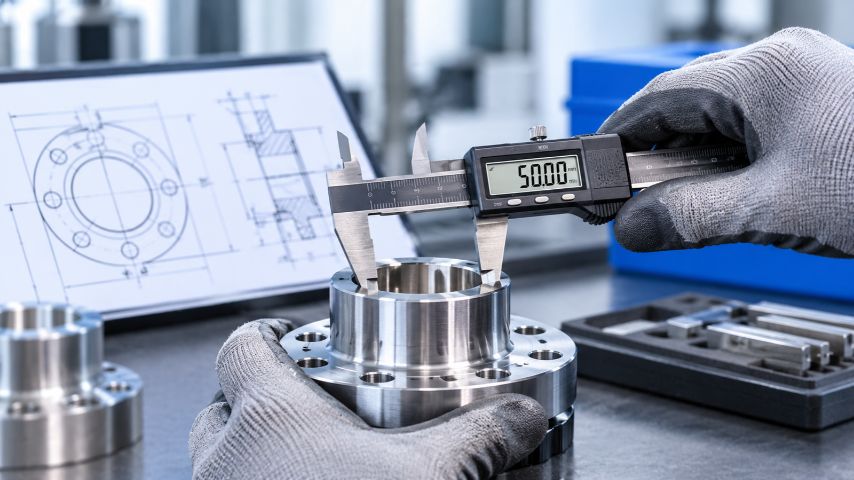
Pneumatic connectors and fittings typically go through in-process checks during machining and a final dimensional inspection before dispatch, which is standard practice across precision component manufacturing generally rather than a claim specific to any one supplier. A buyer evaluating an Indian factory should ask what inspection equipment is used- profile projectors, bore gauges, thread gauges- and whether a First Article Inspection (FAI) report, which documents the first produced part against the drawing before a full run begins, is available on request.
Documentation practices vary meaningfully between factories even within the same certification tier, which is why procurement teams increasingly request a sample inspection report before placing a trial order. A supplier willing to share inspection records for a pneumatic connector batch, rather than a generic quality statement, gives a buyer something they can actually compare against their own incoming inspection data once parts arrive.
Technical Communication During the Inquiry Stage
A pneumatic component order usually starts with a drawing, not a conversation, so how a factory responds to that drawing says more about trustworthiness than almost anything else in the early sourcing stage.
Reading Drawings and Flagging Specification Gaps
International buyers consistently rank a supplier’s ability to interpret a technical drawing correctly, and flag ambiguities before quoting, above almost every other early-stage signal. A factory that returns a quote without questions on a drawing with an unclear tolerance stack or an unspecified surface finish is more likely to produce a part that technically matches the drawing but fails in the buyer’s assembly. Pneumatic fittings are particularly sensitive to this, since thread class and sealing surface finish directly affect leak performance.
A manufacturer that asks about mating thread standards, operating pressure, or material compatibility with the pneumatic system’s working fluid before quoting is demonstrating the kind of process discipline that reduces rework later. Buyers sourcing from Attri Tech Machines or any Indian pneumatic supplier for the first time should treat the quality of the clarifying questions asked during quoting as a practical indicator of how the production run itself will be managed.
Response Speed and Time-Zone Coordination
Time-zone overlap is a real constraint for international buyers working with Indian suppliers, and response speed during the inquiry stage is one of the most commonly cited factors in early supplier comparisons. A buyer in North America or Europe needs clarity on realistic response windows before committing, since a 24-hour email delay on a drawing clarification can add a week to an already tight project timeline once compounded across several rounds of back-and-forth.
Clear, written confirmation of specifications, rather than verbal assurance, also matters more in cross-border sourcing, where a misunderstood tolerance or material grade is harder to resolve after production than before it. Buyers evaluating Indian pneumatic suppliers should ask how quotations, drawing revisions, and production confirmations are documented, since a supplier relying on informal confirmation is harder to hold accountable if a dispute arises later.
Get a Quote on Your Pneumatic Component Specification
Sourcing pneumatic connectors or fittings for a new application starts with a drawing review, not a quote request. Attri Tech Machines’ engineering team reviews your specification, confirms material and tolerance fit against its published process capability, and responds with a scoped production plan before any commitment is made.
The Range of Pneumatic Components Typically Sourced From India
Buyers researching Indian pneumatic suppliers usually source from a fairly narrow set of component types, which helps frame which capability questions matter for a given inquiry.
Common Categories International Buyers Request
Pneumatic connectors, push-to-connect fittings, quick-release couplings, and related turned or milled components make up most international inquiries into Indian pneumatic suppliers. Attri Tech Machines’ range of pneumatic connectors, couplings, and fitting parts covers this category in full depth. These parts are generally machined from brass, aluminum, or free-cutting steel, with thread accuracy and sealing-surface finish as the two specifications buyers scrutinize most closely during sample evaluation.
Beyond basic fittings, some buyers source pneumatic system sub-components such as valve-adjacent turned parts or custom adaptor fittings built to a non-standard thread or port configuration. These lower-volume, higher-customization orders tend to favor suppliers who can turn around a small batch quickly, not just those with the lowest unit cost, since tooling and setup time matter more per piece at low volumes.
Matching Component Choice to System Requirements
Selecting the right pneumatic component depends on the system’s operating pressure, the working medium, and the environment the part sits in, considerations that apply to pneumatic component selection generally, not to any one manufacturer’s catalog. A buyer sourcing fittings for a food-grade or washdown application, for example, needs a different material and finish than one sourcing for a general industrial air line, and a supplier that asks about these conditions before quoting is applying the same specification diligence covered earlier in this post.
International buyers sourcing pneumatic components for export-grade equipment should confirm material certificates and traceability documentation separately from the component’s dimensional inspection report, since the two cover different aspects of quality. A factory that can produce both on request demonstrates a more complete documentation process than one offering dimensional sign-off alone.
Lead Time and Logistics for Cross-Border Orders
Lead time expectations differ meaningfully between a domestic Indian buyer and an international one, mainly because of the logistics layer added after production finishes.
Production Lead Times for Pneumatic Component Orders
Production lead times for pneumatic connectors and fittings depend on order volume, material availability, and whether custom tooling is needed for a non-standard thread or port design, rather than following a single fixed timeline across all orders. A buyer requesting a standard-dimension fitting in an existing material typically sees a shorter lead time than one requesting a custom-port adaptor requiring new tooling, and a trustworthy supplier will quote these differently rather than giving one blanket figure for all inquiry types.
Buyers should ask for a lead-time breakdown that separates production time from inspection and documentation time, since the latter can add several days for orders requiring a First Article Inspection report or material certificates. Factories that quote a single, undifferentiated lead-time figure across very different order types generally provide less useful planning information than those that break it down by order complexity.
Export Documentation and Shipping Coordination
International buyers should confirm export documentation requirements, commercial invoices, packing lists, certificates of origin, and any material or inspection certificates, before production begins, not after the order ships, since document errors are harder to correct once goods are in transit. Attri Tech Machines does not claim a verified export shipment history as independently confirmed; buyers requiring specific export references should request them directly from the company rather than assuming export experience based on general marketing material.
Shipping coordination for pneumatic components is usually straightforward given their relatively low weight and compact packaging compared to larger machined parts. However, buyers should still confirm who handles freight forwarding, whether the supplier offers FOB or CIF terms, and how customs documentation is prepared. Clarity on these points before the order is confirmed reduces the chance of delays once the shipment is ready to move.
Due Diligence Before Committing to a Supplier
Trust in cross-border sourcing is built through verification steps, not assurances, and pneumatic component buyers have a few practical ones available before committing to volume.
Requesting Samples and First Article Inspection
Requesting a small sample batch, and, where the order size justifies it, a First Article Inspection report, before a full production run is the most direct way a buyer can verify a pneumatic supplier’s actual process consistency rather than relying on its stated capability. This step matters more for pneumatic components than for many other machined parts, because small dimensional deviations in a sealing surface or thread can cause a functional failure that isn’t visible on casual inspection.
A supplier that resists providing samples, or charges disproportionately for a small trial batch, is giving a useful signal about how the relationship will work at scale. Buyers evaluating Indian pneumatic suppliers for the first time should treat a factory’s willingness to support a reasonably sized sample order as a stronger trust indicator than any certification claim on its own.
Verifying Certification and Facility Claims Directly
Buyers should verify certification status, facility size, and equipment claims directly with the supplier rather than relying solely on website content, since published figures can lag behind current status or vary slightly across a company’s own materials. Where a figure appears inconsistently across a supplier’s own sources, facility square footage or certification validity dates, for example, the more conservative or more recently dated figure should be treated as provisional pending direct confirmation.
Some buyers also request a factory visit or a third-party inspection service for larger orders, particularly for a first production run with a new supplier. This is a reasonable step for any cross-border sourcing relationship, regardless of country, and Indian pneumatic suppliers accustomed to international buyers generally accommodate reasonable verification requests as part of the inquiry process.
Misconceptions That Affect Sourcing Decisions
Some assumptions international buyers bring to Indian sourcing decisions don’t hold up against how the industry actually operates, and a few risks apply regardless of which country a buyer sources from.
Common Misconceptions About Indian Manufacturing Quality
A persistent misconception is that lower unit cost automatically means lower quality control, which doesn’t match how cost structures actually work in Indian precision manufacturing. Labor and overhead costs are genuinely lower in India relative to several competing sourcing markets, which affects unit pricing independently of the inspection process a factory runs; a lower quote doesn’t by itself indicate a thinner quality process, and a higher one doesn’t guarantee a stronger one.
Another common assumption is that certification alone settles the quality question, which overlooks how much documentation and communication practice vary between similarly certified factories. Two ISO 9001:2015–certified suppliers can have meaningfully different inspection rigor, which is why the due-diligence steps covered earlier in this post matter more than certification status alone when comparing specific suppliers.
Risks That Apply to Any Cross-Border Sourcing Decision
Specification misunderstanding, documentation gaps, and lead-time miscommunication are risks that apply to sourcing pneumatic components from any country, not just Indian manufacturing. A buyer who skips sample verification or doesn’t confirm export documentation requirements upfront faces the same exposure whether the supplier is in India, China, or elsewhere, which is why the verification steps in this post apply as general sourcing practice rather than country-specific caution.
Currency fluctuation, freight cost volatility, and customs policy changes also affect the total landed cost of an order regardless of supplier location, and buyers should factor these into their planning rather than comparing only quoted unit costs across countries. A supplier that discusses these variables openly during quoting is generally easier to plan around than one that quotes a single all-in figure without breaking out what it covers.
Building a Repeatable, Trustworthy Supplier Relationship
A single successful order doesn’t prove a supplier relationship will hold up at scale, and procurement teams generally watch a different set of signals once they move from a trial order to repeat production.
Consistency Across Repeat Production Runs
Dimensional consistency between the first sample batch and later production runs is one of the clearest indicators that a supplier’s process is genuinely repeatable rather than dependent on extra attention given to a first order. Buyers moving from a sample to a larger production commitment should request inspection data from at least one full-volume run, not just the sample batch, to confirm tolerances hold as the order scales and machine utilization increases.
A factory that flags material lot changes, tooling wear schedules, or minor process adjustments proactively, rather than only when a buyer asks, is generally easier to build a long-term sourcing relationship with. This kind of proactive communication matters more over multiple order cycles than in a single transaction, since the pattern determines whether a buyer needs to re-verify quality on every repeat order.
Transparency About Capability Limits
A trustworthy supplier is explicit about what falls outside its current capability rather than accepting every inquiry and figuring out fit afterward. Attri Tech Machines, for example, does not claim aerospace-grade certification or guaranteed tolerances beyond what its published capabilities support, and a buyer sourcing a pneumatic component for a specialized or regulated application should confirm directly whether the specific standard required is one the supplier currently meets.
This kind of boundary-setting is a more reliable trust signal than broad capability claims, since a supplier willing to say “that’s outside our current process” on one inquiry is more credible when it says “yes, we can do this” on another. Buyers comparing multiple Indian and international pneumatic suppliers should weigh this kind of honesty about limits alongside the more commonly checked factors like certification and sample quality.
When to Request Additional Certification or Third-Party Verification
Not every pneumatic sourcing decision requires third-party inspection, but certain conditions make it worth the added time. Buyers sourcing pneumatic components for safety-critical systems, regulated industries, or large production commitments should request a third-party inspection or a formal material certificate rather than relying on the supplier’s internal sign-off alone, particularly on a first order with a new factory.
Similarly, where a buyer’s own end customer requires documentation beyond what a supplier’s standard quality process produces, a specific test report format, for instance, that requirement should be raised during quoting, not after production starts, since retrofitting documentation onto completed parts is rarely possible. For most standard pneumatic connector and fitting orders, a sample inspection and a reviewed First Article Inspection report are generally sufficient; third-party verification becomes more valuable as order value, regulatory exposure, or the cost of a field failure increases.
Work With a Supplier That Documents What It Produces
Sourcing pneumatic components internationally comes down to verifiable process discipline, not promotional claims. Share your drawing and specification requirements, and Attri Tech Machines’ team will confirm fit against its pneumatic connector product range before quoting.
Attri Tech Machines Pvt. Ltd.
Plot No. 10–11, Gopal Industrial Compound, Meerut Road Industrial Area, Ghaziabad – 201001, Uttar Pradesh, India
Phone: +91 92665 79700
Email: sales@attritechmachines.com
Website: www.attritechmachines.com
Frequently Asked Questions About Why Global Buyers Trust Indian Pneumatic Suppliers
Why do international buyers consider Indian manufacturers for pneumatic components specifically?
Cost efficiency relative to several competing sourcing markets, combined with growing process documentation practices, makes Indian manufacturers a common comparison point for pneumatic connectors and fittings. Buyers should still verify a specific supplier’s certification, inspection process, and sample quality directly rather than assuming capability based on country-level sourcing trends alone.
Does Attri Tech Machines export internationally?
Attri Tech Machines’ international shipment history is company-reported rather than independently verified in the source material reviewed for this post. Buyers who need confirmed export references, prior shipment documentation, or specific country experience should request this information directly from the company before relying on it in a sourcing decision.
What certifications should I ask an Indian pneumatic supplier for?
At minimum, ask for current ISO 9001:2015 certification status and validity dates. Depending on the application, also ask whether material certificates, RoHS/REACH compliance, or a First Article Inspection report are available, since these cover different aspects of quality that a general quality management certification does not confirm on its own.
How do I verify a supplier’s facility and machinery claims before ordering?
Request current documentation directly from the supplier rather than relying solely on website figures, since published facility size or equipment counts can be outdated or stated inconsistently across a company’s own materials. A factory visit or a third-party verification service is a reasonable additional step for larger or first-time orders.
What’s a reasonable sample size to request before a full pneumatic component order?
Sample quantities vary by part complexity and material. Still, most buyers request enough pieces to run a meaningful dimensional check rather than a single piece, since a single sample can’t confirm process repeatability across a production batch.
How do Indian pneumatic suppliers typically handle technical drawing clarifications?
Established suppliers generally flag unclear tolerances, missing surface-finish callouts, or ambiguous thread specifications before quoting, not after production starts. The quality of clarifying questions asked at the quoting stage is a practical way to gauge how carefully a supplier will handle the actual production run.
What materials are commonly used for pneumatic connectors sourced from India?
Brass, aluminum, and free-cutting steel are the most common materials for pneumatic connectors and fittings, chosen based on the system’s operating pressure, working medium, and environmental exposure. Material selection should be confirmed against the buyer’s specific application rather than assumed from a standard catalog listing.
How does lead time for international pneumatic orders differ from domestic orders?
International orders generally add time for export documentation, freight coordination, and customs processing on top of standard production and inspection time. Buyers should request a lead-time breakdown that separates production from documentation and shipping stages rather than a single combined figure.
What’s the biggest risk when sourcing pneumatic components from an unfamiliar overseas supplier?
Specification misunderstanding carried through an entire production run without an early sample check is generally the costliest risk, since it isn’t caught until a full batch has already been produced. Requesting a sample batch and a First Article Inspection report before committing to volume is the most direct way to reduce this risk, regardless of the supplier’s country.